
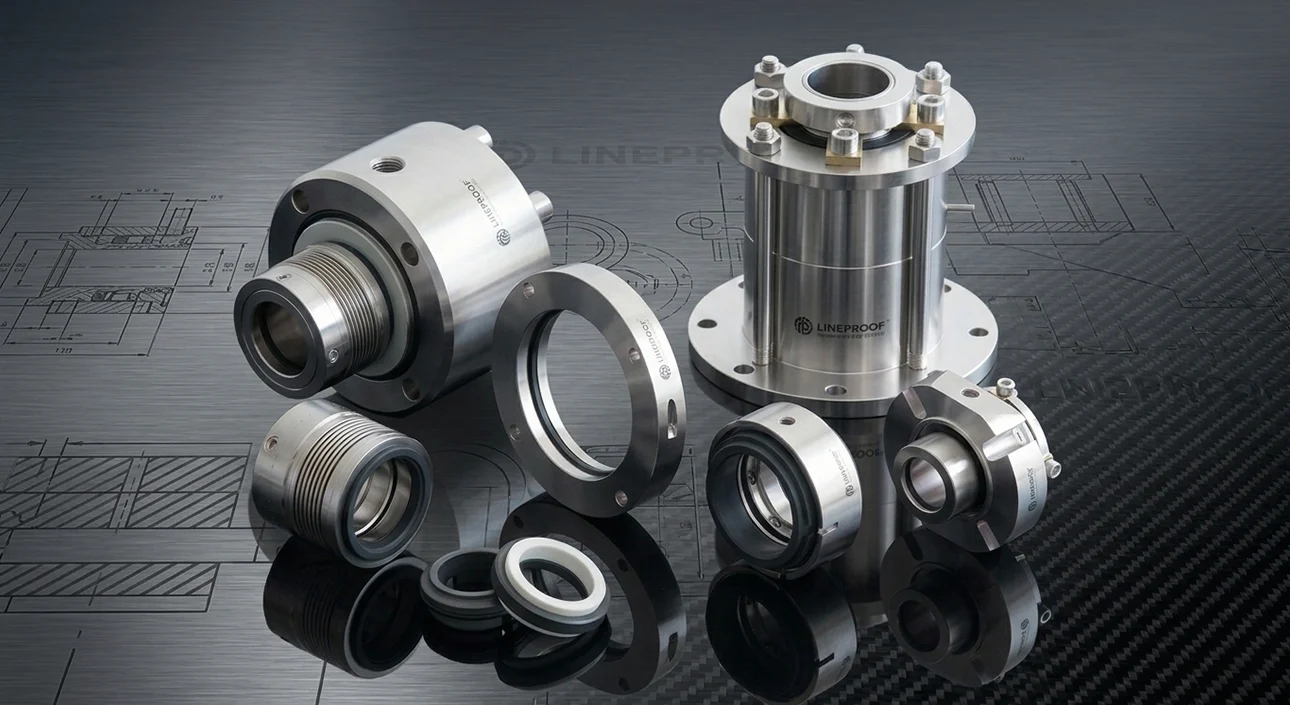
Mechanical seals are essential components in modern rotating equipment, designed to prevent leakage of fluids while ensuring safe and efficient machine operation. Compared to traditional packing methods, mechanical seals offer superior sealing performance, reliability, and longer service life.
As a trusted manufacturer and exporter, Lineproof Engineering provides high-quality mechanical sealing solutions engineered for demanding industrial applications.
What is a Mechanical Seal?
A mechanical seal is a precision-engineered device used in pumps, compressors, mixers, and other rotating equipment to prevent fluid leakage between the rotating shaft and stationary housing. It consists of two primary sealing faces—one rotating and one stationary—pressed together to form a tight seal.
These seals are designed to handle high pressure, temperature, and aggressive fluids, making them ideal for critical industrial operations.
Key Benefits of Mechanical Seals
1. Superior Leakage Prevention
One of the most significant advantages of mechanical seals is their ability to provide near-zero leakage. The precision-lapped sealing faces create a tight and reliable seal that minimizes fluid loss and ensures safe operation.
2. Improved Equipment Efficiency
Mechanical seals reduce friction compared to traditional gland packing. This lower friction results in smoother rotation, reduced energy consumption, and improved overall equipment efficiency.
3. Longer Service Life
High-quality materials and advanced engineering allow mechanical seals to operate for extended periods without frequent replacement. This durability helps reduce maintenance costs and increases equipment uptime.
4. Reduced Maintenance and Downtime
Unlike conventional packing seals that require regular adjustment and replacement, mechanical seals require minimal maintenance. This leads to fewer shutdowns and consistent production performance.
5. Capability to Handle High Pressure and Temperature
Mechanical seals are specifically designed to withstand extreme operating conditions. They can perform reliably in high-pressure pumps, high-temperature fluids, and demanding industrial environments.
6. Enhanced Safety and Environmental Protection
By preventing hazardous fluid leakage, mechanical seals help protect both workers and the environment. They reduce exposure to toxic, flammable, or corrosive substances, ensuring safer plant operations.
7. Compatibility with Various Fluids
Mechanical seals are suitable for a wide range of fluids including water, oil, chemicals, solvents, and slurries. Specialized seal materials can be selected based on fluid properties and operating conditions.
8. Cost-Effective in the Long Run
Although the initial investment may be higher than traditional sealing methods, mechanical seals provide long-term savings through reduced product loss, lower maintenance costs, and extended equipment life.
Common Applications of Mechanical Seals
Mechanical seals are widely used across various industries, including:
- Chemical Processing Plants
- Oil and Gas Industry
- Pharmaceutical Manufacturing
- Food and Beverage Processing
- Water Treatment Facilities
- Power Generation Plants
These seals play a crucial role in maintaining process integrity and operational reliability.
Conclusion
Mechanical seals offer numerous advantages, including superior leakage control, enhanced equipment efficiency, long service life, and improved safety. Their advanced design makes them the preferred sealing solution for modern industrial machinery.
Choosing the right mechanical seal based on operating conditions and application requirements is essential to achieve optimal performance and long-term reliability.