
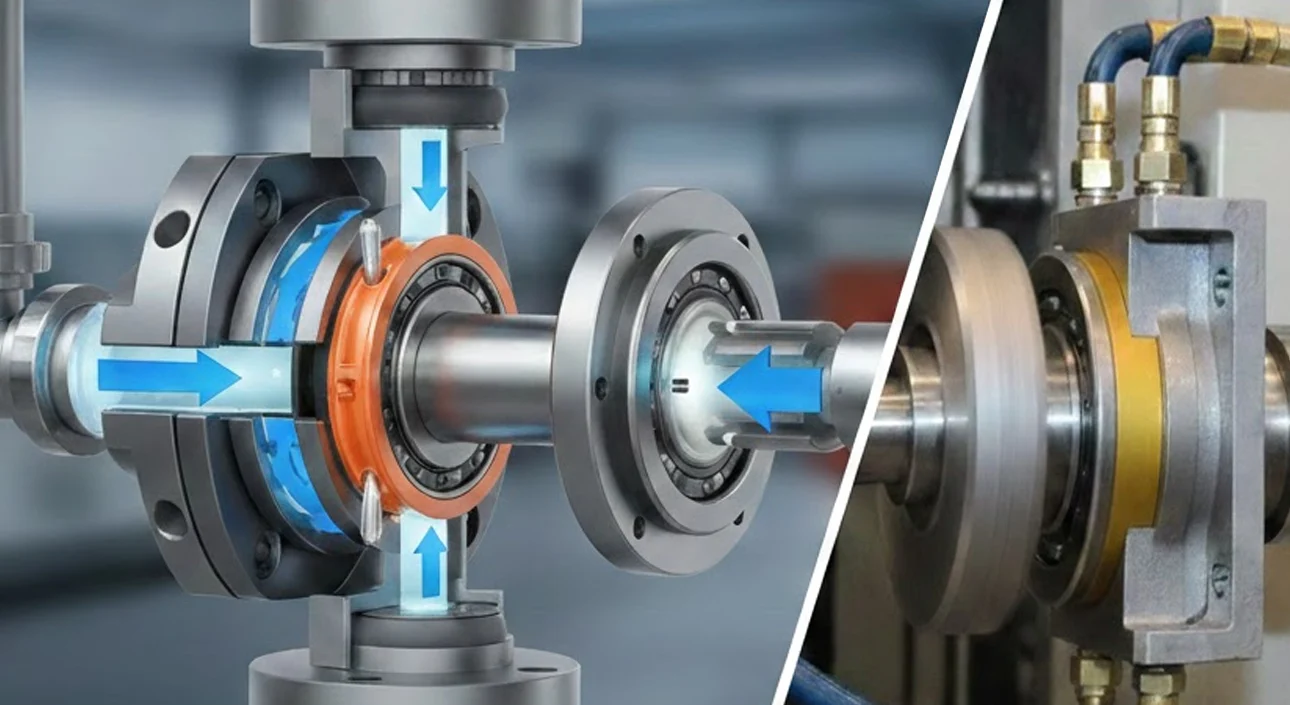
In many industrial applications, transferring fluids or steam to rotating equipment is essential for smooth and efficient operation. A rotary joint is a critical mechanical device designed to achieve this transfer without leakage while the shaft is rotating.
Manufactured with precision engineering, rotary joints play a key role in enhancing operational efficiency, reliability, and safety across various industries. At Lineproof Engineering, rotary sealing solutions are designed to ensure long service life and consistent performance under demanding conditions.
What is a Rotary Joint?
A rotary joint (also known as a rotary union) is a mechanical device that allows the transfer of fluid—such as water, steam, oil, or coolant—from a stationary source into rotating equipment. It maintains a sealed connection while the shaft rotates, preventing leakage and ensuring continuous fluid flow.
Rotary joints are widely used in applications where heat transfer, cooling, or lubrication is required in rotating machinery.
How Does a Rotary Joint Work?
A rotary joint works by creating a sealed interface between stationary and rotating components. The main principle involves a rotating shaft connected to the machine and a stationary housing connected to the fluid supply line.
Working Mechanism:
- Fluid enters through the stationary inlet.
- The fluid passes through internal passages inside the rotary joint.
- Sealing components maintain a leak-proof barrier between stationary and rotating parts.
- The fluid flows into the rotating shaft or drum while it continues to spin.
- Spent fluid exits through a return path (in dual-flow designs).
This design ensures uninterrupted fluid transfer even at high rotational speeds and pressures.
Key Components of a Rotary Joint
A rotary joint typically consists of the following main parts:
- Housing – The stationary outer body connected to the supply line
- Shaft / Rotor – Rotates along with the equipment
- Mechanical Seals – Prevent leakage between rotating and stationary faces
- Bearings – Support smooth rotation and reduce friction
- Springs – Maintain consistent sealing pressure
- Ports (Inlet/Outlet) – Allow fluid entry and exit
Each component is engineered to withstand pressure, temperature, and rotational stress.
Types of Rotary Joints
Depending on the application and fluid type, rotary joints are available in various designs:
- Single Passage Rotary Joint – For one fluid transfer line
- Dual Passage Rotary Joint – For simultaneous inlet and outlet flow
- Steam Rotary Joint – Designed for high-temperature steam transfer
- Coolant Rotary Joint – Used in cooling and lubrication systems
- Hydraulic Rotary Joint – Suitable for high-pressure oil transfer
Applications of Rotary Joints
Rotary joints are used across multiple industries where rotating equipment requires fluid supply:
- Paper and Pulp Machinery
- Textile and Printing Machines
- Rubber and Plastic Processing
- Steel and Metal Rolling Mills
- Food Processing Equipment
- Chemical and Pharmaceutical Plants
These joints ensure efficient heat transfer, cooling, and lubrication in continuous production systems.
Benefits of Using Rotary Joints
- Leak-proof fluid transfer during rotation
- Improved machine efficiency and productivity
- Reduced maintenance and downtime
- Capability to handle high temperature and pressure
- Extended equipment life through proper lubrication and cooling
Conclusion
A rotary joint is an essential component for industries that rely on fluid transfer in rotating equipment. By enabling a secure and continuous flow of fluids without leakage, it ensures optimal performance and reliability of machinery.
Selecting the right rotary joint design based on operating conditions such as pressure, temperature, and fluid type is crucial for long-term efficiency and safety in industrial applications.